
FIRE ANTS
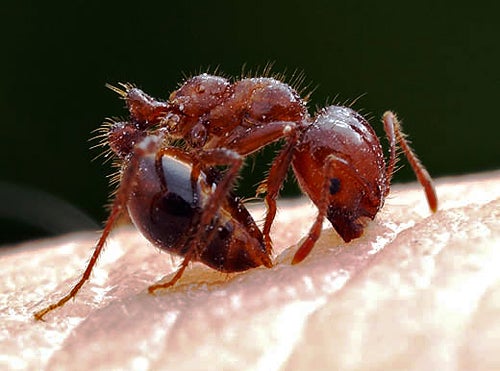
Small but aggressive ants, ⅛–¼ inch long, reddish-brown in color.
Requires FIRE ANT TREATMENT
Fire ants create more pronounced dome-shaped mounds, often in sunny, open areas. These mounds lack a central opening and may appear suddenly after rain or watering. The nests can seriously disrupt lawns and kill grass by damaging root systems. Deliver painful stings when disturbed, often spreading quickly through yards.
Treatment is provided as both corrective and preventive measures. Each treatment comes with a 90-day guarantee.
BLACK CARPENTER ANTS
:max_bytes(150000):strip_icc()/GettyImages-1068090130-6a2f8df586424be2a74dc4b6958ecd17.jpg)
Among the largest ants, ¼–½ inch long, shiny black in color.
Requires CARPENTER ANT TREATMENT
Infested wood areas often exhibit smooth galleries or tunnels carved into damp or damaged wood. They prefer moist or softened wood and can expand into sound wood, causing significant structural damage if left untreated. You may spot small piles of wood shavings or frass—fine, sawdust-like material—around holes in walls, windowsills, beams, or softwood areas.
Treatment is provided as needed, not preventive.
RED CARPENTER ANTS

Among the largest ants, ¼–½ inch long, with reddish-brown bodies
Requires CARPENTER ANT TREATMENT
Infested wood areas often exhibit smooth galleries or tunnels carved into damp or damaged wood. They prefer moist or softened wood and can expand into sound wood, causing significant structural damage if left untreated. You may spot small piles of wood shavings or frass—fine, sawdust-like material—around holes in walls, windowsills, beams, or softwood areas.
Treatment is provided as needed, not preventive.
FIElD ANTS
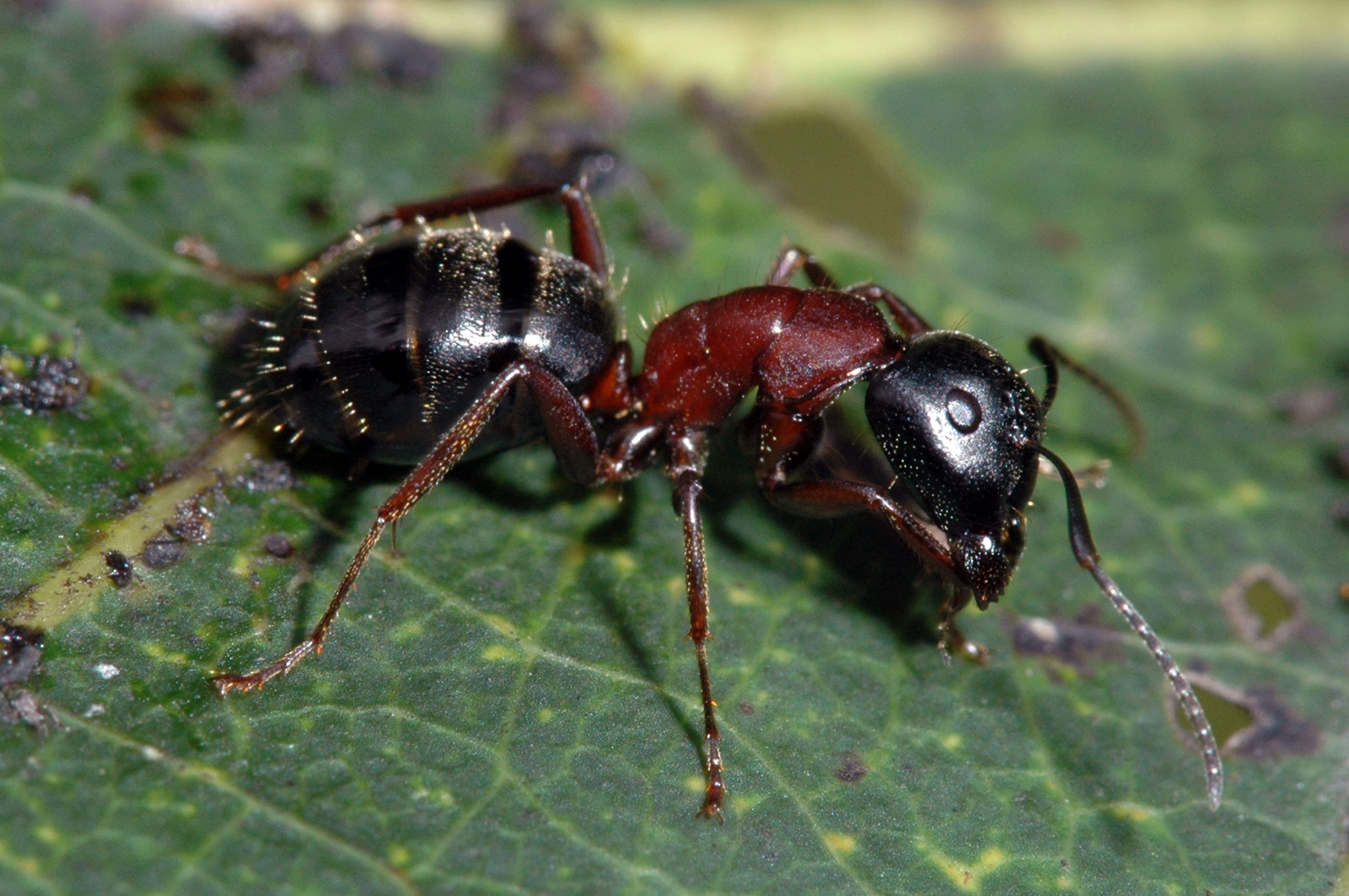
Medium to large ants, ¼–⅜ inch long, ranging in colors from black, brown, red, or a mix.
Requires CARPENTER ANT TREATMENT
Outdoor nesters, they don’t damage wood, but their mounds can be unsightly and disruptive. Field ants typically build irregular, loosely formed soil mounds in lawns, gardens, or landscaped areas. These are often scattered in open fields or near foundations and can displace grass or soil in a noticeable way.
Treatment is provided as needed, not preventive.
ANTS vs. TERMITES
TERMITES OR ANTS?
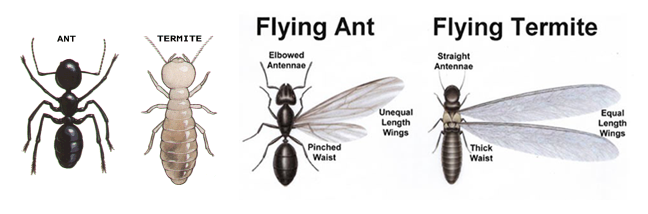
The graphic above highlights the key differences between ants and termites. Both can produce swarmers—winged adults that leave the colony to start new ones—and these are often mistaken for one another.